

Sleep Paralysis
Table of Contents Hide
Key Points On Sleep Paralysis
Recurrent isolated sleep paralysis is a generally harmless condition where you temporarily cannot move or speak when falling asleep or waking up, while being fully aware.
The primary causes and risk factors are related to sleep disruption, such as irregular sleep schedules, sleep deprivation, and jet lag.
Treatment does not involve medication; instead, it focuses on education, reassurance, and improving sleep habits. For those with severe anxiety, cognitive behavioral therapy tailored toward isolated sleep paralysis may be helpful.
An Overview of Recurrent Isolated Sleep Paralysis
Recurrent isolated sleep paralysis is a condition that involves a temporary inability to move your body when you are falling asleep or waking up.
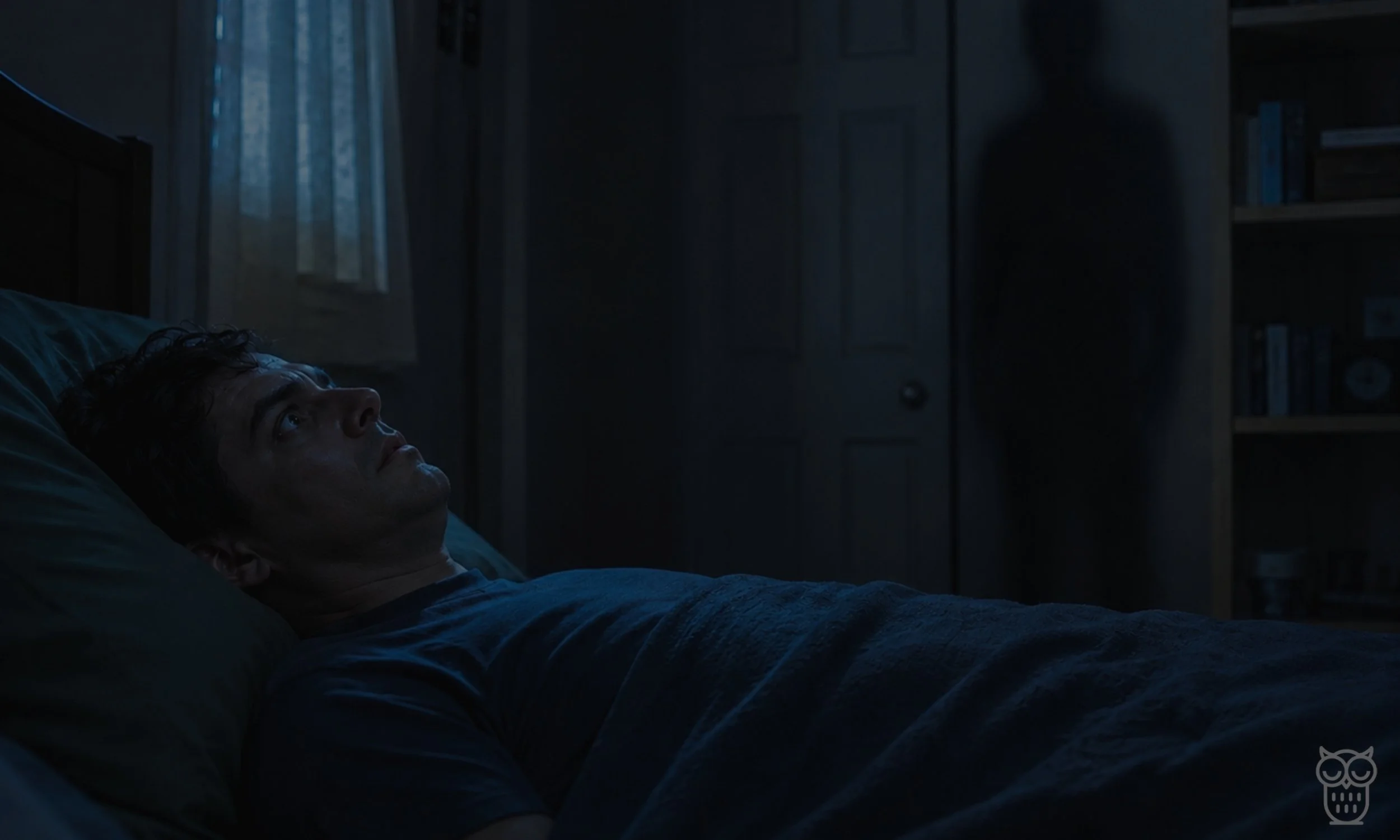
During an episode of sleep paralysis, you are awake and conscious of your surroundings but cannot speak or move your limbs, trunk, or head. These experiences can be unsettling, especially when accompanied by hallucinations, but they are considered medically benign, meaning they are not physically harmful and typically resolve on their own within a few seconds to a few minutes.
Understanding this condition is the first step toward managing the anxiety it can cause. So what exactly is happening in the brain and body during one of these episodes?
What Is Recurrent Isolated Sleep Paralysis?
Recurrent isolated sleep paralysis is a type of parasomnia, which is a category of sleep disorders involving undesirable events or experiences that occur while falling asleep, sleeping, or waking up.
Specifically, it is a parasomnia connected to REM (rapid eye movement) sleep, the stage of sleep where most dreaming occurs.
The condition is defined by recurring episodes where you cannot perform voluntary movements, either at the beginning of sleep (the hypnagogic form) or upon waking (the hypnopompic form).
A key part of the diagnosis is that these episodes happen in the absence of narcolepsy, another sleep disorder that can also feature sleep paralysis.
During REM sleep, your body experiences a normal, temporary muscle paralysis called atonia, which prevents you from acting out your dreams. Sleep paralysis happens when this paralysis continues for a short time after you've woken up. It is considered a "dissociated state," a term used to describe a situation where elements of different states of being. In this case, wakefulness and REM sleep overlap (Mahowald & Schenck, 1991).
These episodes can also be accompanied by vivid and sometimes frightening hallucinations in a significant number of cases, estimated to happen in 25% to 75% of episodes.
These can be visual (seeing things), auditory (hearing things), or tactile (feeling sensations). A common experience is the distinct feeling that another person, sometimes perceived as a threatening presence, is in the room.
So, just how many people experience this unusual condition?
How Common Is Recurrent Isolated Sleep Paralysis?
While episodes can feel isolating, they are not exceptionally rare. A large review of many studies estimated that about 7.6% of the general population will experience at least one episode of sleep paralysis during their lifetime. However, reported rates in individual studies vary widely, from as low as 2% to as high as 60% (Sharpless & Barber, 2011).
Sleep paralysis appears to happen more often in certain groups. For instance, studies have found that up to 28.3% of students and 31.9% of psychiatric patients experience it. This rate increases to 34.6% for psychiatric patients who have a history of panic disorder (Sharpless & Barber, 2011).
Some ethnic differences have also been observed. In the general population, people of African descent report a slightly higher lifetime prevalence. Similarly, in psychiatric samples, a higher prevalence has been found in people of African descent compared to other ethnicities.
Among student samples, the highest lifetime prevalence is seen in people of Asian descent (Sharpless & Barber, 2011). While some data suggests a slightly higher rate in women compared to men, there have been no consistent findings on sex differences (Sharpless & Barber, 2011).
The condition typically begins during the teenage years, with the first episodes usually occurring between the ages of 14 and 17. Most episodes tend to happen during a person's twenties and thirties.
Now that we know who is most likely to experience it, what are the underlying factors that can trigger an episode?
What Causes Recurrent Isolated Sleep Paralysis? What Are the Risks That Make It More Likely?
The primary cause of sleep paralysis is a temporary overlap of REM sleep and wakefulness. It is thought to occur when the brain has an arousal from REM sleep, but the muscle atonia (paralysis) that is characteristic of this sleep stage continues even after the mind has become awake and alert.
A study that induced sleep paralysis by interrupting sleep demonstrated that episodes happen during the transition from REM sleep to wakefulness (Takeuchi et al., 1992). This suggests that individuals who are more sensitive to sleep disruptions may be more prone to experiencing sleep paralysis.
Several risk factors, or triggers, can make these episodes more likely to occur. These include:
Irregular Sleep-Wake Schedules: Having an inconsistent bedtime and wake-up time can disrupt the natural sleep cycle.
Sleep Deprivation: Not getting enough sleep is a significant trigger.
Jet Lag: Traveling across time zones disrupts the body's internal clock, or circadian rhythm.
Sleep Position: Episodes are reported to happen more frequently when sleeping in the supine position, or flat on one's back.
In some cases, there may also be a genetic link. A few families have been described with multiple members experiencing recurrent isolated sleep paralysis. One genetic analysis pointed to a connection with variations in a circadian rhythm gene known as PER2, suggesting that an impaired internal body clock could play a role in some families (Denis et al., 2015).
What does a person actually go through during one of these episodes?
What Are the Signs And Symptoms of Recurrent Isolated Sleep Paralysis?
The signs and symptoms of a sleep paralysis episode are distinct and can be very alarming, particularly for someone who has never experienced one before. The core symptom is a temporary but complete inability to move the limbs, trunk, and head or to speak.
Despite this paralysis of the body's voluntary muscles, two key muscle groups remain unaffected: the external eye muscles and the diaphragm.
This means you can still move your eyes and, most importantly, you can still breathe. However, the auxiliary respiratory muscles in the chest (like the intercostal muscles) are paralyzed, which can partially affect breathing and contribute to a commonly reported feeling of pressure on the chest.
A central feature of the experience is that the individual is fully awake and aware of their surroundings. This combination of mental awareness and physical immobility often leads to severe anxiety.
Adding to the distress, episodes are often accompanied by powerful hallucinations. Researchers have proposed a model that groups these hallucinations into three categories (Cheyne et al., 1999):
Intruder: This involves a sensed presence, fear, and auditory or visual hallucinations of something or someone being in the room.
Incubus: This category includes the feelings of pressure on the chest, difficulty breathing, and sometimes pain, which aligns with the historical and folkloric descriptions of a demon or creature sitting on the sleeper's chest.
Unusual Bodily Experiences: These are sensations of floating, flying, or having an out-of-body experience.
An episode of sleep paralysis typically lasts from a few seconds to a few minutes and usually ends on its own. It can also be stopped by outside sensations, such as a touch or the sound of someone's voice.
Given these symptoms, how does a healthcare professional confirm a diagnosis?
How is Recurrent Isolated Sleep Paralysis Diagnosed?
The diagnosis of recurrent isolated sleep paralysis is typically made based on a patient's description of their experiences. According to the official diagnostic criteria from the International Classification of Sleep Disorders, Third Edition, Text Revision (ICSD-3-TR), four conditions must be met (American Academy of Sleep Medicine, 2023):
A person experiences a recurring inability to move their trunk and all limbs either when falling asleep or upon waking up.
Each episode lasts from seconds to a few minutes.
The episodes cause significant distress, which may include anxiety about going to bed or a fear of sleep itself.
The symptoms are not better explained by another condition, such as narcolepsy, another medical or mental disorder, or the use of medication or substances.
In most cases, the clinical features are so distinct that the diagnosis is straightforward. However, when the presentation is unclear, especially if there are concerns about other potential conditions, a sleep specialist may recommend further testing. This could include a video polysomnography, a comprehensive test that records brain waves, heart rate, breathing, and muscle activity during sleep, or prolonged video-EEG monitoring to rule out conditions like nocturnal seizures (Bergmann et al., 2022).
Polysomnography studies have sometimes shown a specific pattern during sleep paralysis: an intrusion of alpha brain waves (typical of relaxed wakefulness) into REM sleep, which is then followed by an arousal and the persistence of muscle atonia into the waking state (Takeuchi et al., 1992).
Are there other medical conditions commonly seen alongside sleep paralysis?
Health Problems Linked to Recurrent Isolated Sleep Paralysis
Recurrent isolated sleep paralysis is often associated with other conditions, particularly those that disrupt sleep or involve mental health. Because sleep disruption is a known trigger for sleep paralysis, it is not surprising that it is more common in people with disorders that lead to fragmented sleep.
Conditions linked to a higher prevalence of sleep paralysis include:
Mental Health Disorders: Sleep paralysis is more frequent in individuals with post-traumatic stress disorder (PTSD) and anxiety disorders. In some cases of PTSD, flashbacks of the trauma may even manifest as hallucinations during an episode (Denis, 2018). Bipolar disorder has also been reported as an associated condition.
Other Sleep Disorders: An increased prevalence is seen in people with insomnia, obstructive sleep apnea (Sharma et al., 2023), and nocturnal leg cramps (Denis, 2018).
Other Factors: The use of anxiolytic medications (medications for anxiety), alcohol use, and engaging in shift work have also been associated with sleep paralysis (American Academy of Sleep Medicine, 2023).
It is important to investigate sleep quality and symptoms of insomnia in any patient reporting sleep paralysis, as addressing these underlying issues can often help reduce the frequency of episodes (Denis, 2018).
How do these frightening episodes impact a person's day-to-day life?
How Recurrent Isolated Sleep Paralysis Affects Daily Life
The most direct impact of recurrent isolated sleep paralysis on daily life is the "clinically significant distress" it can cause (American Academy of Sleep Medicine, 2023). The experience of being awake, aware, yet completely paralyzed can be terrifying. This fear is not limited to the episode itself; it can lead to persistent bedtime anxiety and a genuine fear of falling asleep.
This sleep-related anxiety can create a negative cycle. Worrying about having an episode can make it harder to fall asleep, potentially leading to sleep deprivation, which is itself a major risk factor for triggering another episode.
The cultural and historical interpretations of sleep paralysis highlight its psychological impact. For centuries, before the scientific explanation was understood, cultures around the world developed folklore to make sense of the experience, often attributing it to supernatural assaults, ghosts, or demons (Hufford, 1982). This universal tendency to interpret the event in threatening terms highlights the intense fear it generates. While the condition itself is not physically dangerous, the anxiety and disruption to sleep it causes can negatively affect a person's sense of well-being.
With such a distressing condition, what can be done to manage it?
How Is Recurrent Isolated Sleep Paralysis Treated?
Management for recurrent isolated sleep paralysis focuses on education, reassurance, and behavioral changes rather than medication. Because the condition is benign and episodes are self-limiting, the first and most important step is to reassure the patient that the experience, while frightening, is not physically harmful and will pass on its own.
Pharmacotherapy, meaning treatment with medications, is not recommended for this condition. Instead, the following strategies are recommended:
Sleep Hygiene Education: Patients are informed about the importance of good sleep habits. This is the most effective approach to reducing the frequency of episodes. Key elements include maintaining a regular sleep-wake schedule (going to bed and waking up at the same time every day, including weekends), and ensuring a sufficient amount of sleep each night, typically 7 to 9 hours for adults.
Managing Predisposing Factors: Patients are advised to avoid known triggers, such as chronic sleep deprivation and irregular sleep patterns.
Cognitive Behavioral Therapy (CBT): For individuals who experience significant anxiety or frightening hallucinations, a specific form of CBT for isolated sleep paralysis may be helpful. This therapy can provide coping strategies for managing fear during an episode and may include techniques like the imaginary repetition of successfully resolving an episode.
Patients are also made aware of factors that can shorten an episode, such as being touched or spoken to by a bed partner.
What practical steps can you take if you experience this condition?
Tips for Living Well With Recurrent Isolated Sleep Paralysis
If you experience recurrent isolated sleep paralysis, there are several practical steps you can take to manage the condition and reduce its impact on your life.
Prioritize a Consistent Sleep Schedule: Go to bed and (especially important) wake up at roughly the same time every day. This helps regulate your body's internal clock and can reduce the likelihood of sleep disruptions that trigger paralysis.
Ensure You Get Enough Sleep: Aim for 7 to 9 hours of quality sleep per night. Sleep deprivation is a primary trigger, so making sleep a priority is one of the most effective management strategies.
Adjust Your Sleeping Position: Episodes are reported to occur more often when sleeping on your back. Try sleeping on your side to see if this reduces the frequency of events.
Educate Your Bed Partner: If you have a partner, explain what sleep paralysis is and what happens during an episode. You may be able to make soft noises or breathe differently during an episode. Ask them to touch you or speak to you if they notice these signs, as outside sounds or a touch can help end the paralysis.
Stay Calm and Focus on Movement: During an episode, remind yourself that it is temporary and not harmful. Some people find that trying to make a small, focused movement, like wiggling a toe or finger, can help break the paralysis.
Consider Professional Therapy: If the anxiety and fear associated with the episodes are affecting your quality of life or causing you to avoid sleep, seek out a therapist who specializes in sleep disorders. Cognitive behavioral therapy can provide you with effective coping tools.
When should you consider talking to a doctor about these experiences?
When to Get Professional Help for Recurrent Isolated Sleep Paralysis
While sleep paralysis is not considered a dangerous condition, it is a good idea to consult a healthcare professional under certain circumstances. You should consider making an appointment if:
The episodes cause you significant anxiety or fear. If you find yourself feeling distressed about the episodes, developing a fear of going to sleep, or if the anxiety is impacting your daily life, a professional can offer reassurance and management strategies.
The episodes are frequent and disrupt your sleep. If sleep paralysis is happening often and preventing you from getting restful sleep, it is important to address it.
You are concerned it might be a symptom of another condition. Sleep paralysis can be a symptom of narcolepsy. If you also experience other symptoms like excessive daytime sleepiness, sudden muscle weakness triggered by emotions (cataplexy), or vivid dreams, a full evaluation by a sleep specialist is necessary to rule out other disorders.
You want to rule out other possibilities. In some rare cases, events that seem like sleep paralysis could be related to other medical issues, such as nocturnal seizures. If there is any uncertainty about the diagnosis, a professional evaluation is the best course of action
Key Takeaways About Recurrent Isolated Sleep Paralysis
It's a Benign Condition: Sleep paralysis is not physically dangerous, and episodes are temporary, lasting only a few seconds to minutes.
It's an Overlap of States: The condition is caused by a brief persistence of the muscle paralysis of REM sleep into a state of wakefulness.
Sleep Habits Are Key: The most common triggers are related to poor or irregular sleep, including sleep deprivation and jet lag. Improving sleep hygiene is the most effective way to prevent episodes.
Hallucinations Are Common: Many people experience vivid and often frightening hallucinations during an episode, which contributes to the associated anxiety.
Management is Behavioral: There is no medication for isolated sleep paralysis. Treatment focuses on education, reassurance, and behavioral strategies like maintaining a consistent sleep schedule and, if needed, cognitive behavioral therapy.
Frequently Asked Questions About Sleep Paralysis
Q1: What is sleep paralysis and why does it happen?
A1: Sleep paralysis is a temporary inability to move or speak that occurs when you are falling asleep or waking up. It happens because of a brief overlap between REM sleep and wakefulness. During REM sleep, your muscles are naturally paralyzed (a state called atonia) to prevent you from acting out dreams. Sleep paralysis occurs when this muscle atonia continues for a few seconds or minutes after your brain has become awake and aware.
Q2:Is sleep paralysis a sign of something serious?
A2: No, recurrent isolated sleep paralysis is considered a benign condition, which means it is not physically harmful or dangerous. While the experience can cause intense fear and anxiety, the episodes are temporary and resolve on their own. However, if you also have symptoms like severe daytime sleepiness or sudden muscle weakness with emotion, you should see a doctor to rule out narcolepsy.
Q3: How common is sleep paralysis?
A3: It is more common than many people think. A large review of studies found that about 7.6% of the general population experiences at least one episode in their lifetime. The rate is higher in certain groups, with up to 28.3% of students and 31.9% of psychiatric patients reporting episodes (Sharpless & Barber, 2011).
Q4: What are the main triggers for a sleep paralysis episode?
A4: The most common triggers are related to sleep disruption. These include sleep deprivation (not getting enough sleep), having an irregular sleep-wake schedule, and jet lag. Episodes are also reported to happen more often when sleeping on your back. In some cases, conditions like insomnia, anxiety, and obstructive sleep apnea can also increase the risk (Denis, 2018).
Q5: Can you see or hear things during sleep paralysis?
A5: Yes, vivid hallucinations are a common part of sleep paralysis, occurring in up to 75% of episodes. These can be visual (seeing a presence in the room), auditory (hearing sounds or voices), or tactile (feeling pressure on your chest). These experiences are a major reason why episodes can feel so frightening (Cheyne et al., 1999).
Q6: How can you stop a sleep paralysis episode?
A6: An episode usually ends on its own, but it can often be stopped more quickly by outside sensations, like being touched or spoken to by a bed partner. Some people find that trying to make an intense, focused effort to move a small muscle, like a finger or a toe, can help break the paralysis.
Q7: What is the best treatment for recurrent sleep paralysis?
A7: The best treatment does not involve medication. Management focuses on education and improving sleep habits. The most effective strategies are maintaining a consistent sleep schedule, getting 7-9 hours of sleep nightly, and avoiding known triggers. For those who experience severe anxiety, a specific type of cognitive behavioral therapy (CBT) can be helpful.
Q8: When should I see a doctor for sleep paralysis?
A7: You should see a doctor if the episodes are causing you significant distress or anxiety, if they are happening frequently and disrupting your sleep, or if you are worried they might be a symptom of another underlying condition like narcolepsy. A doctor can provide a proper diagnosis, reassurance, and a plan to manage the episodes.
References
American Academy of Sleep Medicine. (2023). International classification of sleep disorders (3rd ed., text revision). American Academy of Sleep Medicine.
Bergmann, M., Brandauer, E., Stefani, A., Heidbreder, A., Unterberger, I., & Högl, B. (2022). The additional diagnostic benefits of performing both video-polysomnography and prolonged video-EEG-monitoring: When and why.Clinical Neurophysiology Practice, 7, 98–102.
Cheyne, J. A., Rueffer, S. D., & Newby-Clark, I. R. (1999). Hypnagogic and hypnopompic hallucinations during sleep paralysis: Neurological and cultural construction of the night-mare. Consciousness and Cognition, 8(3), 319–337.
Denis, D. (2018). Relationships between sleep paralysis and sleep quality: Current insights. Nature and Science of Sleep, 10, 355–367.
Denis, D., French, C. C., Rowe, R., Zavos, H. M. S., Nolan, P. M., Parsons, M. J., & Gregory, A. M. (2015). A twin and molecular genetics study of sleep paralysis and associated factors. Journal of Sleep Research, 24(4), 438–446.
Hufford, D. J. (1982). The terror that comes in the night: An experience-centered study of supernatural assault traditions. University of Pennsylvania Press.
Mahowald, M. W., & Schenck, C. H. (1991). Status dissociatus–a perspective on states of being. Sleep, 14(1), 69–79.
Sharpless, B. A., & Barber, J. P. (2011). Lifetime prevalence rates of sleep paralysis: A systematic review.Sleep Medicine Reviews, 15(5), 311–315.
Sharma, A., Sakhamuri, S., & Giddings, S. (2023). Recurrent fearful isolated sleep paralysis - a distressing co-morbid condition of obstructive sleep apnea. Journal of Family Medicine and Primary Care, 12(3), 578–580.
Takeuchi, T., Miyasita, A., Sasaki, Y., Inugami, M., & Fukuda, K. (1992). Isolated sleep paralysis elicited by sleep interruption. Sleep, 15(3), 217–225.
Written By: Dan Ford, DBSM, Sleep Psychologist
Published By: The Better Sleep Clinic Team