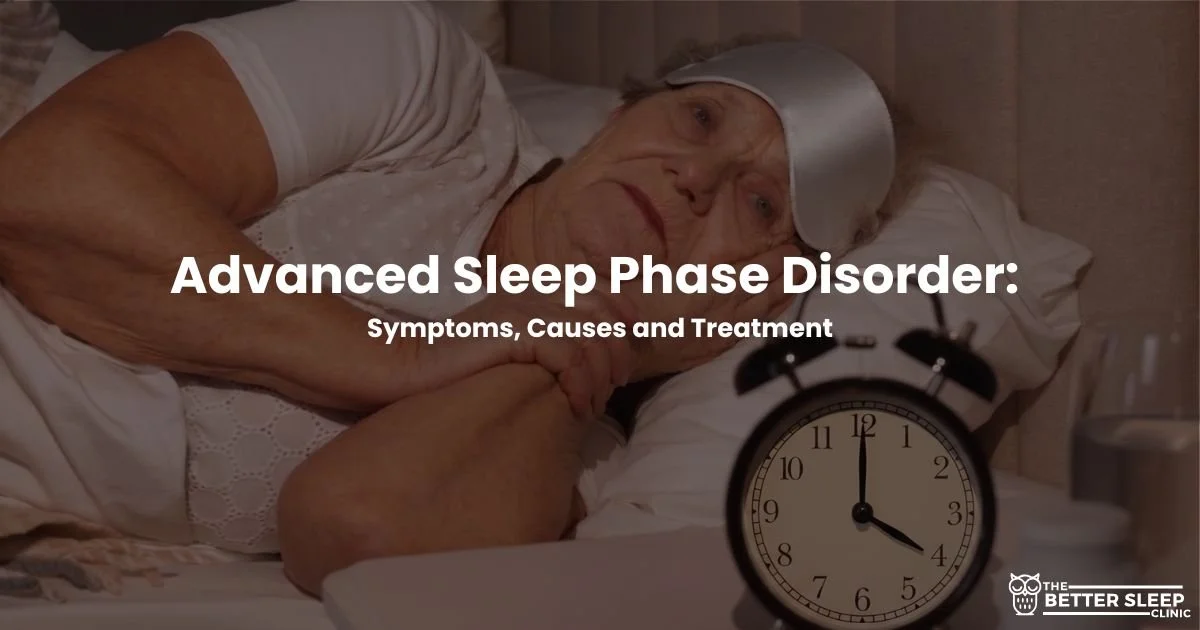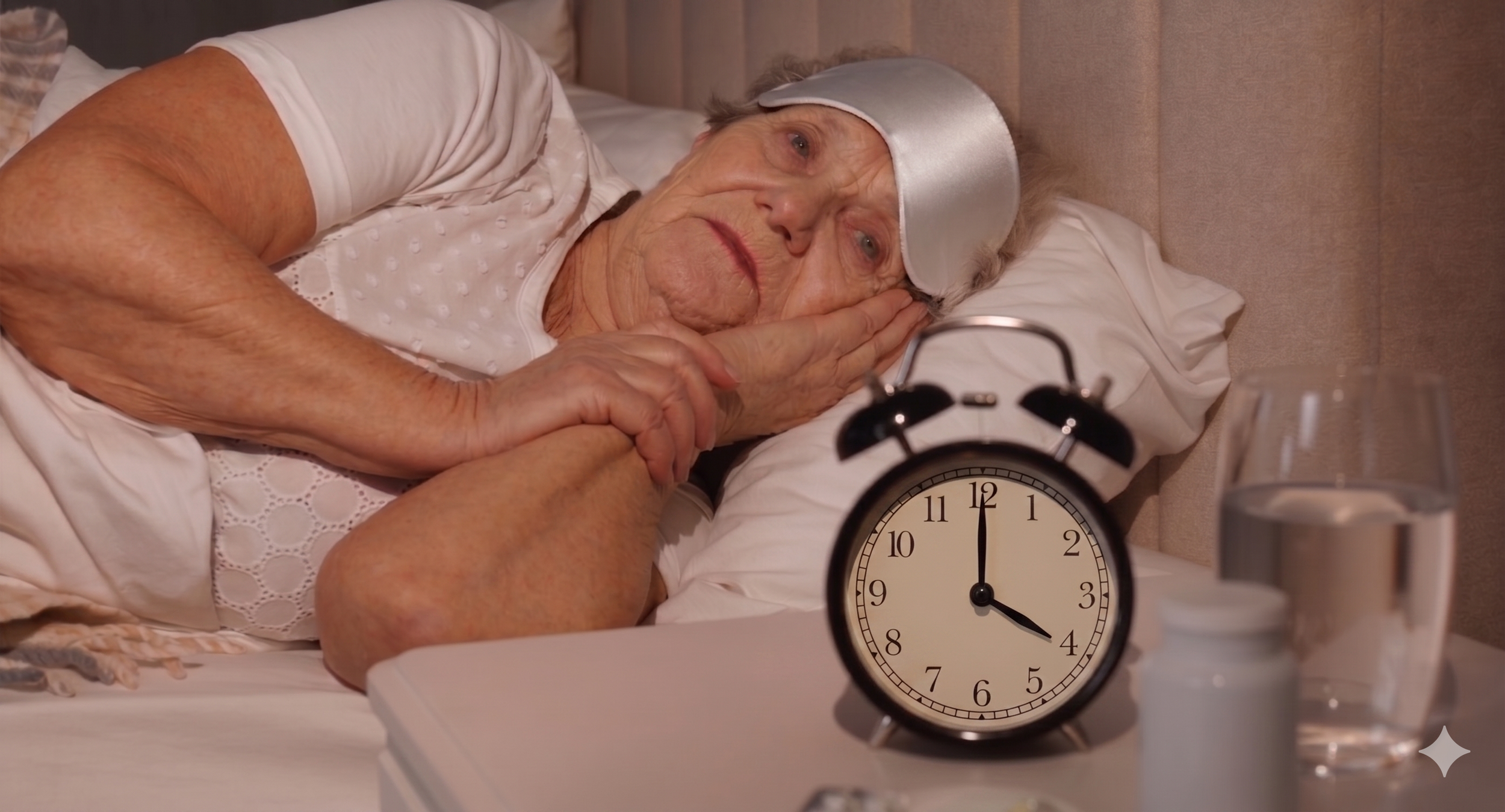
Advanced Sleep Phase Disorder (ASPD)
Table of Contents Hide
Key Points On Advanced Sleep Wake Phase Disorder
Advanced Sleep-Wake Phase Disorder (ASWPD) is a sleep condition where your body's internal clock is set several hours earlier than normal, causing you to feel sleepy in the early evening and wake up in the very early morning.
The sleep itself is usually normal for your age - the problem is purely the timing (Abbott, Reid, & Zee, 2022; Sateia & Thorpy, 2022).
The main causes are related to genetics and age. Treatment focuses on carefully timed exposure to bright light in the evening to help reset the body's clock.
ASWPD is often mistaken for other conditions like depression because a key symptom - waking up too early - is common to both (Abbott, Reid, & Zee, 2022).
An Overview of Advanced Sleep-Wake Phase Disorder
Advanced Sleep-Wake Phase Disorder, or ASWPD, is a condition rooted in the body's internal clock (circadian alerting system) the biological system that controls when you feel sleepy and when you feel alert. For people with ASWPD, this internal clock runs several hours ahead of the typical schedule, creating a real gap between when their body wants to sleep and when the rest of the world expects them to be awake. This misalignment can lead to persistent challenges, including difficulty participating in evening social activities and a build-up of lost sleep when trying to keep up with a typical daily schedule.
Understanding this condition is the first step toward managing it effectively. It is not a matter of personal preference or habit, but a genuine biological condition. Because the symptoms can overlap with other health issues, a correct diagnosis is necessary to receive the right support and avoid inappropriate treatments.
So, what exactly defines this early-shifted schedule?
What Is Advanced Sleep-Wake Phase Disorder?
Advanced Sleep-Wake Phase Disorder is a type of circadian rhythm sleep-wake disorder where a person’s natural sleep and wake times are consistently much earlier than most people's, often by two hours or more (Abbott, Reid, & Zee, 2022). This means someone with ASWPD might feel an overwhelming urge to sleep at 7 p.m. and then naturally wake up, fully rested, at 3 a.m.
A key feature of ASWPD is that when people are able to sleep according to their internal clock, the sleep they get is of normal quality and length for their age (Sateia & Thorpy, 2022). This distinguishes advanced sleep phase from insomnia. The problem comes from the clash between this internal schedule and the outside world's expectations, such as work, school, or family life, which are usually built around a later schedule. This conflict can lead to chronic sleep loss if the person forces themselves to stay up later but still wakes up in the early morning hours, unable to fall back asleep.
But just how many people experience this condition?
How Common Is Advanced Sleep-Wake Phase Disorder?
Advanced Sleep-Wake Phase Disorder is considered a rare condition, with estimates suggesting it affects less than 1% of the general population (Harsanyi, Ratarasarn, Amara, & Maddox, 2022). However, many experts think the real number is probably higher because many people with an early sleep schedule may not find it distressing enough to seek a medical diagnosis (Harsanyi et al., 2022).
The likelihood of having ASWPD increases with age, affecting about 1% of middle-aged adults (Abbott, Reid, & Zee, 2022). While the disorder appears to affect men and women equally, some evidence suggests that women may report more distress from the condition, possibly because men and women naturally tend to prefer slightly different sleep times (Abbott, Reid, & Zee, 2022; Harsanyi et al., 2022).
Given its link to age and genetics, what is happening inside the body to cause this shift?
What Causes Advanced Sleep-Wake Phase Disorder? What Are the Risks That Make It More Likely?
The primary cause of ASWPD is a problem with the body's internal clock — a small region of the brain that influences the timing of sleep and wake propensity. The disorder is thought to stem from one of two issues: either the internal clock naturally runs on a cycle that is shorter than 24 hours, or the body has an unusual sensitivity to light, particularly in the morning (Abbott, Reid, & Zee, 2022).
The most well-understood risk factors for ASWPD are genetic. In some families, the condition is passed down through generations in a pattern known as familial advanced sleep phase syndrome (FASPS). Research has found that changes in specific "clock genes"—such as PER2, CKI-δ, PER3, CRY2, and TIMELESS—are responsible for these inherited forms of the disorder (Abbott, Reid, & Zee, 2022). These genetic changes directly shorten the period of the internal clock, a finding confirmed in scientific studies (Landolt & Dijk, 2022).
Other notable risk factors include:
Advanced Age: As people get older, their circadian rhythms naturally tend to shift earlier (Harsanyi et al., 2022).
Neurodevelopmental Conditions (such as autism spectrum disorder): Certain neurodevelopmental conditions are associated with a strong tendency to develop an advanced sleep-wake rhythm (Abbott, Reid, & Zee, 2022; Harsanyi et al., 2022).
Premature Birth: A history of being born prematurely with a low birth weight also appears to be something that raises the risk (Abbott, Reid, & Zee, 2022; Harsanyi et al., 2022).
What are the specific experiences that might lead someone to suspect they have ASWPD?
What Are the Signs And Symptoms of Advanced Sleep-Wake Phase Disorder?
The signs and symptoms of ASWPD are consistent and directly related to the body's early-shifted internal clock. People with the disorder typically report a strong, persistent urge to sleep that begins in the late afternoon or early evening. This makes it very difficult to take part in common evening activities like family dinners, social gatherings, or work events (Abbott, Reid, & Zee, 2022).
The other defining symptom is an unavoidable pattern of waking up extremely early in the morning, usually between 2 a.m. and 5 a.m. A key characteristic of this is that the early awakening happens regardless of what time the person went to bed. Even if they manage to stay awake until a more conventional bedtime like 10 or 11 p.m., their internal clock will still wake them up in the pre-dawn hours, preventing them from getting a full night's sleep (Abbott, Reid, & Zee, 2022).
How can a doctor confirm that these symptoms are truly due to ASWPD?
How is Advanced Sleep-Wake Phase Disorder Diagnosed?
A diagnosis of ASWPD is confirmed through a careful evaluation of a person's sleep patterns over time. The process begins with a detailed conversation about your sleep history, where a doctor looks for a long-term pattern of being unable to stay awake until a conventional bedtime and being unable to stay asleep until a desired morning hour, leading to problems in daily functioning (Abbott, Reid, & Zee, 2022).
To confirm the diagnosis and rule out other issues, objective — meaning measurable, recorded — monitoring is needed. This is typically done using one of two methods:
Actigraphy: This involves wearing a wrist-watch-like device that tracks activity and rest patterns continuously. It is worn for at least seven days, though two weeks is often preferred, to confirm that the early sleep pattern is consistent over time (Abbott, Reid, & Zee, 2022).
Sleep Logs: A detailed, daily diary of sleep and wake times is kept for the same period to provide a subjective record of the sleep pattern.
An overnight sleep study, known as polysomnography, where sensors record your brain activity, breathing, and movement while you sleep, is not always needed unless the doctor suspects another sleep disorder, like sleep apnea. If a person with ASWPD does undergo this study during conventional nighttime hours, the results will typically show that they fall asleep very quickly and wake up prematurely (Abbott, Reid, & Zee, 2022).
Beyond the direct symptoms, what other health concerns are associated with this condition?
Health Problems Linked to Advanced Sleep-Wake Phase Disorder
The most serious health problem linked to ASWPD is the high risk of it being misdiagnosed as a mental health condition, particularly depression. This is because waking up in the early morning hours, a hallmark of ASWPD, is also a classic symptom of clinical depression. This confusion can lead to people being incorrectly prescribed antidepressant medications that do not address the underlying circadian rhythm issue (Abbott, Reid, & Zee, 2022).
Another health concern is the chronic sleep deprivation that can result from trying to fight the body's natural rhythm. When a person with ASWPD forces themselves to stay awake later to meet social or work obligations, they still wake up early. This mismatch leads to a growing sleep debt, which can cause excessive daytime sleepiness and mental fatigue, affecting concentration and overall well-being (Abbott, Reid, & Zee, 2022).
Finally, ASWPD is known to occur alongside certain neurodevelopmental conditions and can also make it harder to manage age-related conditions that affect the brain, such as dementia (Harsanyi et al., 2022).
How do these challenges translate into a person's everyday experience?
How Advanced Sleep-Wake Phase Disorder Affects Daily Life
The daily life of a person with ASWPD is primarily affected by the constant struggle between their internal body clock and the schedule of the world around them. Because strong sleepiness sets in during the late afternoon or early evening, their ability to engage in typical evening activities is severely limited. This can strain relationships with family and friends and lead to social isolation (Abbott, Reid, & Zee, 2022).
Forcing themselves to stay awake to attend a social event or finish a work project often comes at a cost. The inevitable early-morning awakening cuts their sleep short, leading to a state of chronic sleep deprivation. This can show up as persistent daytime sleepiness and mental fatigue, making it difficult to perform well at work or school and affecting overall quality of life (Abbott, Reid, & Zee, 2022). The need to structure one's life around an unusually early schedule can also limit career choices and social opportunities.
Given these impacts, what can be done to manage the condition?
How Is Advanced Sleep-Wake Phase Disorder Treated?
Treatment for ASWPD is not about "curing" the condition but about shifting the body's internal clock to better align with a more conventional schedule. The primary and most effective treatment is bright light therapy. The science behind this is based on how the body clock responds to light. Exposure to light in the evening helps to delay the clock, making you feel sleepy later. For ASWPD, using bright light, typically from a specialized light box, for a set period between 7 p.m. and 9 p.m. has been shown to successfully push back sleep times and reduce early morning awakenings (Abbott, Reid, & Zee, 2022).
Other approaches that have been used include:
Chronotherapy: This is a behavioral technique that involves progressively advancing bedtime by three hours every two days, cycling through the clock until you reach the sleep schedule you are aiming for. However, this method is difficult to maintain, and people often relapse quickly once the strict regimen ends (Abbott, Reid, & Zee, 2022).
Melatonin: While taking melatonin in the early morning could theoretically help delay the body clock, there is currently not enough clinical evidence to support its effectiveness or safety for ASWPD. Furthermore, its strong sleep-inducing effects make it impractical to take in the morning when you need to be awake and alert (Abbott, Reid, & Zee, 2022).
What are some practical ways to cope with this condition long-term?
Tips for Living Well With Advanced Sleep-Wake Phase Disorder
Living well with ASWPD often involves a combination of therapy and practical lifestyle changes. For many, the most successful long-term strategy is to adapt their life to their natural rhythm rather than constantly fighting it.
Here are some practical tips:
Adjust Your Schedule: If possible, look for jobs or work schedules that are a better match for an early riser. Careers that start early in the morning can allow a person with ASWPD to work in sync with their body clock, reducing the daily conflict between their body clock and their responsibilities (Abbott, Reid, & Zee, 2022).
Be Consistent with Therapy: If you are using bright light therapy to shift your schedule, you need to keep it up consistently. The effects are not permanent, and stopping the therapy will likely cause your body clock to revert to its natural, earlier setting (Abbott, Reid, & Zee, 2022).
Seek Professional Guidance: Career counseling can be a valuable resource to help identify work schedules and environments that align with an advanced circadian phase, reducing the effect the disorder has on your working life (Abbott, Reid, & Zee, 2022).
Educate Others: Explain your condition to family, friends, and employers. Helping them understand that your sleep pattern is a biological necessity, not a lifestyle choice, can help build understanding and flexibility.
When should these challenges prompt a visit to a specialist?
When to Get Professional Help for Advanced Sleep-Wake Phase Disorder
You should consider seeking professional help if your early sleep and wake times are causing real distress or getting in the way of your personal, social, or work life. If you consistently feel sleepy in the early evening and wake up hours before you want to, leading to sleep deprivation and daytime fatigue, it is worth getting an evaluation.
It is especially important to get a proper diagnosis to prevent being misdiagnosed with another condition, such as depression (Abbott, Reid, & Zee, 2022). A good first step is to talk to your doctor, who may use screening tools like the Horne-Östberg Morningness-Eveningness Questionnaire to identify an extreme morning preference (Abbott, Reid, & Zee, 2022).
For a definitive diagnosis and treatment plan, it is best to seek an evaluation at a specialist sleep clinic. These centers have the expertise to conduct and interpret the necessary tests, such as long-term actigraphy, and can provide guidance on specialized treatments like timed bright light therapy (Abbott, Reid, & Zee, 2022).
Key Takeaways About Advanced Sleep-Wake Phase Disorder
ASWPD is a biological condition where your internal clock is set two or more hours earlier than average, causing early evening sleepiness and pre-dawn awakenings.
It is primarily caused by genetic factors or an internal clock that runs too fast, and it becomes more common with age (Abbott, Reid, & Zee, 2022).
The main challenge of ASWPD is the conflict between your body's schedule and society's expectations, which can lead to social isolation and chronic sleep deprivation.
The most effective treatment is carefully timed bright light therapy in the evening, which helps to delay the internal clock and shift sleep patterns later (Abbott, Reid, & Zee, 2022).
Getting the right diagnosis from a sleep specialist is important for ruling out other conditions, especially depression, and to develop an effective management plan.
Frequently Asked Questions About Advanced Sleep-Wake Phase Disorder
Q1: What is Advanced Sleep-Wake Phase Disorder (ASWPD)?
A1: Advanced Sleep-Wake Phase Disorder is a circadian rhythm disorder where your internal body clock is set two or more hours earlier than is typical. This causes an overwhelming urge to sleep in the early evening and makes you wake up consistently in the pre-dawn hours, often between 2 a.m. and 5 a.m., regardless of your bedtime (Abbott, Reid, & Zee, 2022).
Q2: Is having ASWPD the same as just being a "morning person"?
A2: No, ASWPD is more extreme than simply being a morning person. While a morning person prefers an early schedule, someone with ASWPD experiences an involuntary and often unmanageable need to sleep in the early evening. This leads to real-world difficulties with work, family, and social life that are not typically seen in someone who is just a natural early riser (Abbott, Reid, & Zee, 2022).
Q3: What causes the body clock to run too fast in ASWPD?
A3: The primary causes of ASWPD are related to the body's internal time-keeping system. It is believed to be caused by either an internal body clock that naturally runs on a cycle shorter than 24 hours or an unusual sensitivity to the phase-advancing effects of light (Abbott, Reid, & Zee, 2022). Additionally, genetics play a major role, with specific mutations in "clock genes" like PER2 and CKI-δ being directly linked to inherited forms of the disorder (Abbott, Reid, & Zee, 2022; Landolt & Dijk, 2022).
Q4: Can ASWPD be mistaken for depression?
A4: Yes, ASWPD is frequently misdiagnosed as major depression. This is because a key symptom of both conditions is waking up in the very early morning and being unable to fall back asleep. This can lead to people with ASWPD being incorrectly treated with antidepressants instead of therapies that address the underlying body clock issue (Abbott, Reid, & Zee, 2022).
Q5: How do sleep clinicians diagnose Advanced Sleep-Wake Phase Disorder?
A5: A diagnosis requires more than just reporting an early schedule. A clinician will confirm ASWPD by monitoring your sleep patterns over time, typically for one to two weeks. This is done using a combination of a wrist-worn activity tracker, called an actigraph, and/or a detailed sleep log to get an objective picture of your advanced sleep-wake timing (Abbott, Reid, & Zee, 2022).
Q6: What is the most effective treatment for ASWPD?
A6: The most effective treatment for ASWPD is evening bright light therapy. Using a specialized light box for a set period between 7 p.m. and 9 p.m. sends a signal to the brain to delay the internal clock, which helps push sleep and wake times to a later, more conventional schedule (Abbott, Reid, & Zee, 2022).
Q7: Does ASWPD get worse with age?
A7: The symptoms of ASWPD can become more noticeable or common as people get older. This is because our internal body clocks have a natural tendency to shift earlier as part of the aging process, which can amplify an already advanced sleep phase (Harsanyi et al., 2022).
Q8: Can ASWPD be passed down through families?
A7: Yes, ASWPD can be hereditary. When the condition runs in families, it is known as familial advanced sleep phase syndrome (FASPS). This inherited form is caused by mutations in specific genes that regulate the body's circadian rhythms (Abbott, Reid, & Zee, 2022).
References
Abbott, S., Reid, K. J., & Zee, P. C. (2022). Circadian disorders of the sleep-wake cycle. In M. Kryger, T. Roth, C. A. Goldstein, & W. C. Dement (Eds.), Principles and practice of sleep medicine (7th ed.). Elsevier.
Harsanyi, K., Ratarasarn, K., Amara, A. W., & Maddox, M. H. (2022). Epidemiology of sleep medicine. In M. Kryger, T. Roth, C. A. Goldstein, & W. C. Dement (Eds.), Principles and practice of sleep medicine (7th ed.). Elsevier.
Landolt, H.-P., & Dijk, D.-J. (2022). Genetics and genomic basis of sleep in healthy humans. In M. Kryger, T. Roth, C. A. Goldstein, & W. C. Dement (Eds.), Principles and practice of sleep medicine (7th ed.). Elsevier.
Sateia, M. J., & Thorpy, M. J. (2022). Classification of sleep disorders. In M. Kryger, T. Roth, C. A. Goldstein, & W. C. Dement (Eds.), Principles and practice of sleep medicine (7th ed.). Elsevier.
Written By: The Better Sleep Clinic Team
Reviewed By: Dan Ford, DBSM, Sleep Psychologist